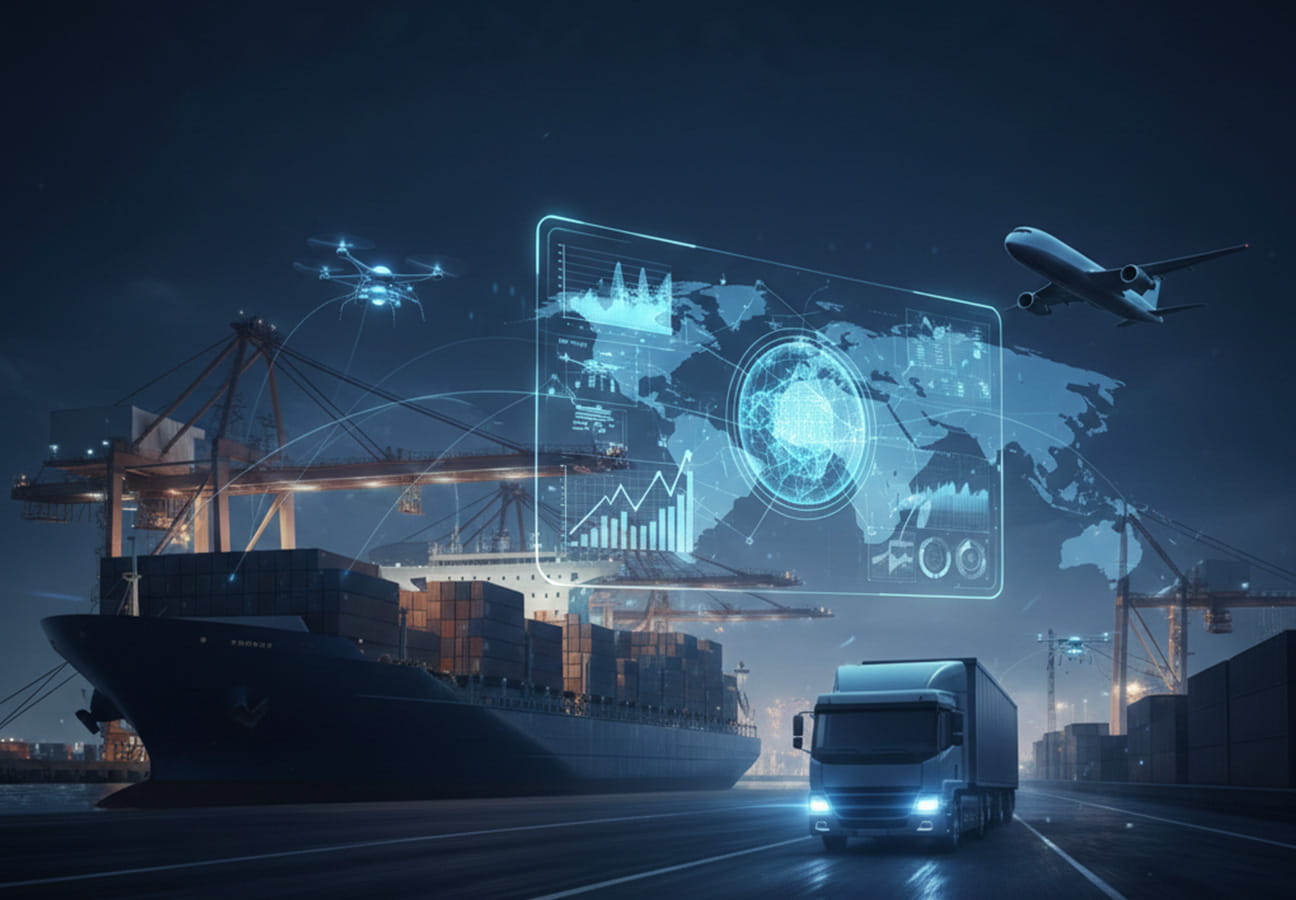
Technology is changing the way businesses move goods around the world. One of the biggest game-changers in recent years is Artificial Intelligence (AI). From route planning to warehouse automation, AI is helping logistics and shipping companies work faster, smarter, and more efficiently.
Let’s explore how AI is transforming the logistics industry.
1. Smarter Route Optimization
AI helps companies choose the fastest and most cost-effective delivery routes. By analyzing traffic patterns, weather conditions, fuel costs, and delivery schedules, AI systems can suggest the best possible route in real time.
This means:
- Faster deliveries
- Lower fuel consumption
- Reduced transportation costs
Customers receive their orders on time, and companies save money.
2. Better Demand Forecasting
AI can analyze historical sales data, seasonal trends, and market behavior to predict future demand. This helps businesses avoid overstocking or running out of products.
Accurate forecasting improves:
- Inventory planning
- Warehouse space usage
- Customer satisfaction
When the right products are available at the right time, operations run smoothly.
3. Warehouse Automation
Many warehouses now use AI-powered robots and smart systems to manage inventory. These systems can sort, pick, and pack items faster than manual processes.
Benefits include:
- Reduced human error
- Faster order processing
- Lower labor costs
Automation allows companies to handle higher order volumes without sacrificing accuracy.
4. Real-Time Shipment Tracking
AI improves visibility across the supply chain. Businesses can monitor shipments in real time and quickly respond to delays or disruptions.
Customers also benefit from accurate tracking updates, which increases trust and transparency.
5. Predictive Maintenance
AI systems can monitor vehicles and equipment to detect potential issues before they cause breakdowns. This is known as predictive maintenance.
By fixing problems early, companies reduce downtime, avoid costly repairs, and keep deliveries on schedule.
6. Enhanced Customer Service
AI-powered chatbots and automated support systems can answer customer queries instantly. From tracking orders to resolving basic issues, AI improves response times and overall service quality.
This reduces support workload while improving customer experience.
Final Thoughts
Artificial Intelligence is no longer a future concept — it is already reshaping logistics and shipping. By improving efficiency, reducing costs, and enhancing service quality, AI is helping businesses stay competitive in a fast-moving global market.
Companies that adopt AI-driven solutions today are building smarter, more resilient supply chains for tomorrow.


Leave a comment